Why Grease Traps Matter More in a Commercial Kitchen
Every restaurant, cafe, bar, and commercial kitchen produces fats, oils, and grease (FOG) as a byproduct of cooking and dishwashing. A grease trap or interceptor sits between your kitchen drains and the municipal sewer line, capturing FOG before it can enter the public sewer system. Without one working correctly, FOG cools and solidifies inside pipes — both yours and the city's — creating blockages that back up into your kitchen or, further downstream, into the street.
Houston-area municipalities regulate FOG discharge specifically because grease buildup is one of the leading causes of sanitary sewer overflows. Most commercial kitchens are required to install and maintain a properly sized grease trap or interceptor as a condition of their food service permit.
How Often Should a Grease Trap Be Pumped?
The right interval depends on your trap's size and your kitchen's volume, but most full-service Houston restaurants fall somewhere between monthly and quarterly. A widely used industry guideline — the '25% rule' — says a trap should be pumped once the combined layer of grease and solids reaches 25% of the trap's total volume, since letting it go further reduces the trap's effective capacity and lets more FOG slip through into the sewer line.
High-volume kitchens, fryer-heavy menus, and smaller under-sink traps typically need monthly service. Larger in-ground interceptors serving lower-volume kitchens may be able to stretch to quarterly. Your grease hauler or plumber can help establish the right schedule based on actual buildup, not just a guess.
Warning Signs Your Grease Trap Needs Attention Sooner
Slow-draining sinks or floor drains in the kitchen are usually the first sign. A persistent sewage or rotten-egg odor near the dishwashing or prep area, gurgling sounds from drains, or grease visibly backing up into a sink basin are all signs the trap is at or past capacity. If you notice any of these between scheduled pumpings, don't wait for the next appointment — a backup during service hours is far more disruptive and expensive than an early pump-out.
What Happens If You Skip Maintenance
An overdue grease trap doesn't fail quietly. FOG that isn't captured moves downstream and solidifies in your drain lines, creating a full blockage that typically shows up as a backup at the worst possible time — during a dinner rush. Beyond the immediate mess and lost revenue from a closed kitchen, repeated FOG violations can result in fines, and in serious cases, a commercial kitchen can have its wastewater discharge permit suspended until the problem is corrected.
Emergency grease trap and drain-line service after a backup also costs significantly more than routine scheduled pumping — hydro-jetting a fully clogged commercial line during an emergency call is a far bigger bill than staying ahead of it.
Staff Habits That Protect Your Grease Trap Between Pumpings
Scrape plates and cookware into the trash before washing, rather than into the sink. Never pour used fryer oil or bacon grease down a drain — collect it in a dedicated container for recycling or disposal. Use drain strainers on all kitchen sinks and floor drains to catch food solids before they reach the trap. Train new staff on these habits during onboarding, since a single shift of bad habits can undo months of good grease trap performance.
Working With a Licensed Commercial Plumber
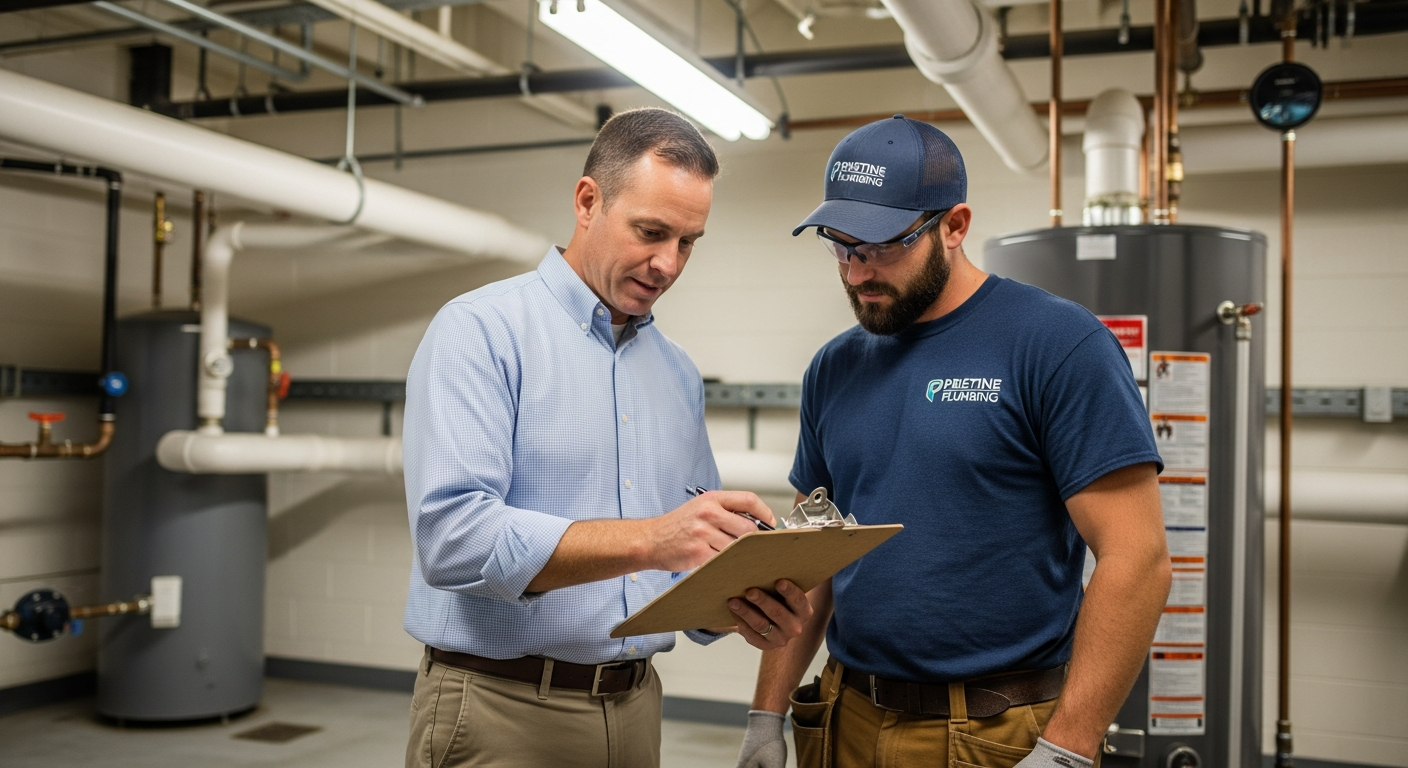
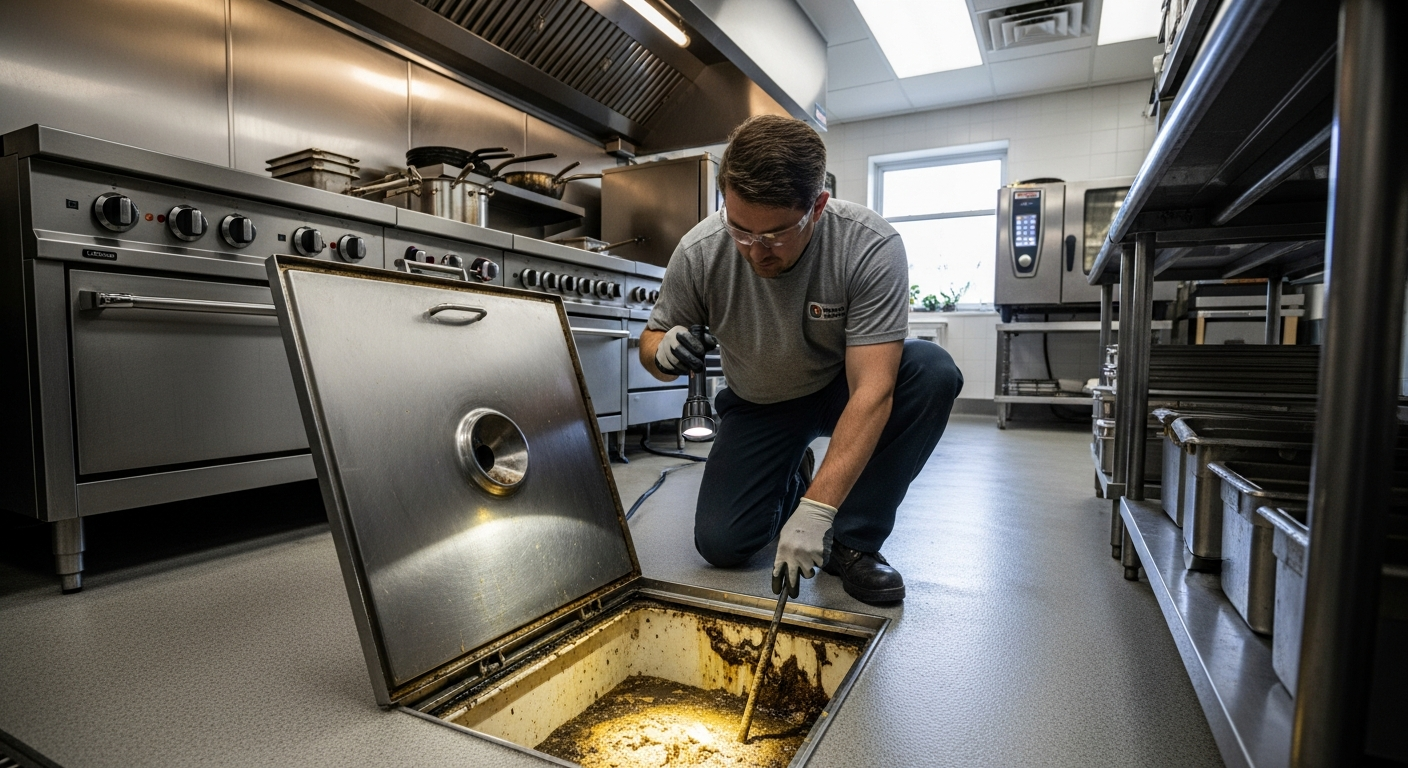
A licensed commercial plumber does more than pump the trap — they'll inspect the interceptor's baffles and inlet/outlet tees for damage, camera the connecting drain lines for early buildup, and confirm the trap is still correctly sized for your current kitchen volume (a common gap when a restaurant expands its menu or seating without reassessing plumbing capacity). Building a relationship with one commercial plumbing provider who tracks your maintenance history also makes compliance documentation far easier if your local health or utility authority ever requests records.
Understanding Houston-Area FOG Discharge Rules
Local wastewater authorities in the Houston area enforce fats, oils, and grease (FOG) discharge limits as part of their sanitary sewer overflow prevention programs, and most require any food service establishment to have a properly sized and maintained grease interceptor as a condition of connecting to the sewer system. Inspectors can and do conduct unannounced checks, particularly for establishments with a history of complaints or prior violations.
Violations typically start with a warning and escalate to fines for repeat or serious non-compliance, and in the most serious cases — usually tied to a documented sewer overflow traced back to a specific establishment — a business can face suspension of its wastewater discharge privileges until the interceptor is repaired, resized, or brought back into a documented maintenance schedule. Keeping pump-out receipts and service records on hand is the easiest way to demonstrate compliance if you're ever asked.
Sizing: A Common Gap When Restaurants Grow
A grease interceptor that was correctly sized when a restaurant opened can become undersized after a menu expansion, added seating, or a shift toward a higher-fry-volume concept — none of which typically trigger an automatic plumbing review. An undersized trap fills faster than its maintenance schedule accounts for, which shows up as more frequent backups even though the pumping interval hasn't changed.
If your kitchen has grown or changed significantly since your interceptor was installed, it's worth having a commercial plumber recalculate your required capacity based on current seating count, menu, and hours, rather than assuming the original sizing still applies. Catching an undersized trap on paper is far less disruptive than discovering it during a dinner-rush backup.
Choosing a Grease Hauling and Maintenance Partner
Not all grease trap service providers offer the same level of documentation or thoroughness. Look for a licensed commercial plumber or hauler who provides a dated, itemized service record every visit (useful for both your own tracking and any compliance inspection), disposes of hauled grease at a licensed facility rather than an informal arrangement, and inspects the trap's internal components — not just pumps and leaves. A provider who flags early wear on baffles or fittings during a routine pump-out can save you from an unplanned failure between scheduled visits.
It's also reasonable to ask a prospective provider how they handle emergency calls outside your scheduled service, since a backup during a Friday dinner rush needs a faster response than routine maintenance does. A provider who already knows your kitchen's layout and trap history from regular scheduled visits will typically resolve an emergency far faster than a plumber seeing your system for the first time.
Need a licensed Houston plumber for this exact issue?
Frequently Asked Questions
How often should a restaurant grease trap be cleaned in Houston?
Most full-service restaurants need service monthly to quarterly, based on the '25% rule' — pumping once grease and solids reach about a quarter of the trap's total volume. Higher-volume or fryer-heavy kitchens usually need more frequent service.
What's the difference between a grease trap and a grease interceptor?
They serve the same purpose, but a grease trap is typically a smaller unit installed under or near a sink, while an interceptor is a larger, often in-ground unit that handles a whole kitchen's wastewater. Larger commercial kitchens usually require interceptors.
Can I pump my own grease trap?
Grease trap waste must be disposed of by a licensed hauler under most local regulations, and improperly disposed grease can result in fines. Most restaurants contract a commercial plumber or grease hauling service rather than doing it themselves.
What are the signs my grease trap is full?
Slow drains, gurgling sounds, a sewage smell near the kitchen, or visible grease backing up into a sink are all signs the trap needs immediate attention rather than waiting for the next scheduled service.
Do I need a permit for grease trap installation?
Yes, most Houston-area municipalities require a permit and inspection for grease trap or interceptor installation as part of a commercial kitchen's food service permitting. A licensed commercial plumber handles the permitting process.
Can grease trap neglect affect my restaurant's health inspection?
Yes. Backups, odors, and pest issues traced to a neglected grease trap can affect health inspection results and, in serious cases, put your wastewater discharge permit at risk.