Why Commercial Plumbing Failures Cost More Than Residential Ones
A burst pipe or backup in a home is disruptive and expensive. The same failure in a commercial building often means lost revenue from a closed business, damaged inventory or equipment, and in multi-tenant properties, liability exposure to other tenants affected by the same failure. A restaurant that closes for a day due to a sewer backup loses far more in revenue than the repair itself typically costs — which is exactly why a proactive maintenance schedule pays for itself.
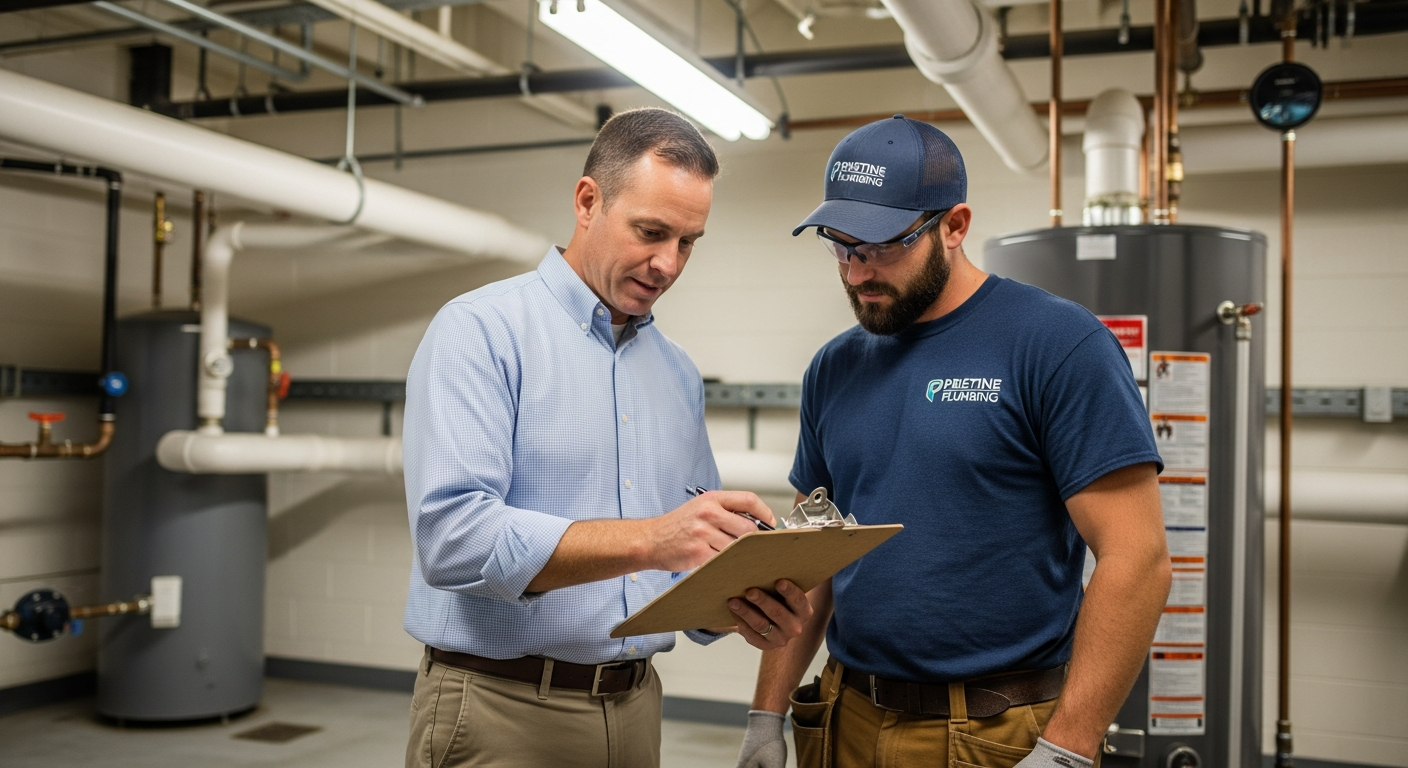
Quarterly: Water Heaters and Backflow Preventers
Commercial water heaters work harder than residential units and should be inspected quarterly for signs of sediment buildup, corrosion, and pressure relief valve function. Backflow preventers — required on most commercial properties to protect the public water supply from contamination — should also be tested quarterly, and many municipalities require annual certified testing as a compliance condition of your water service.
Quarterly: Restroom and Break Room Fixtures
High-traffic commercial restrooms put far more wear on toilets, faucets, and flush valves than residential fixtures see. A quarterly walkthrough checking for running toilets, dripping faucets, loose fixtures, and slow drains catches small problems before they become water waste or a customer-facing complaint.
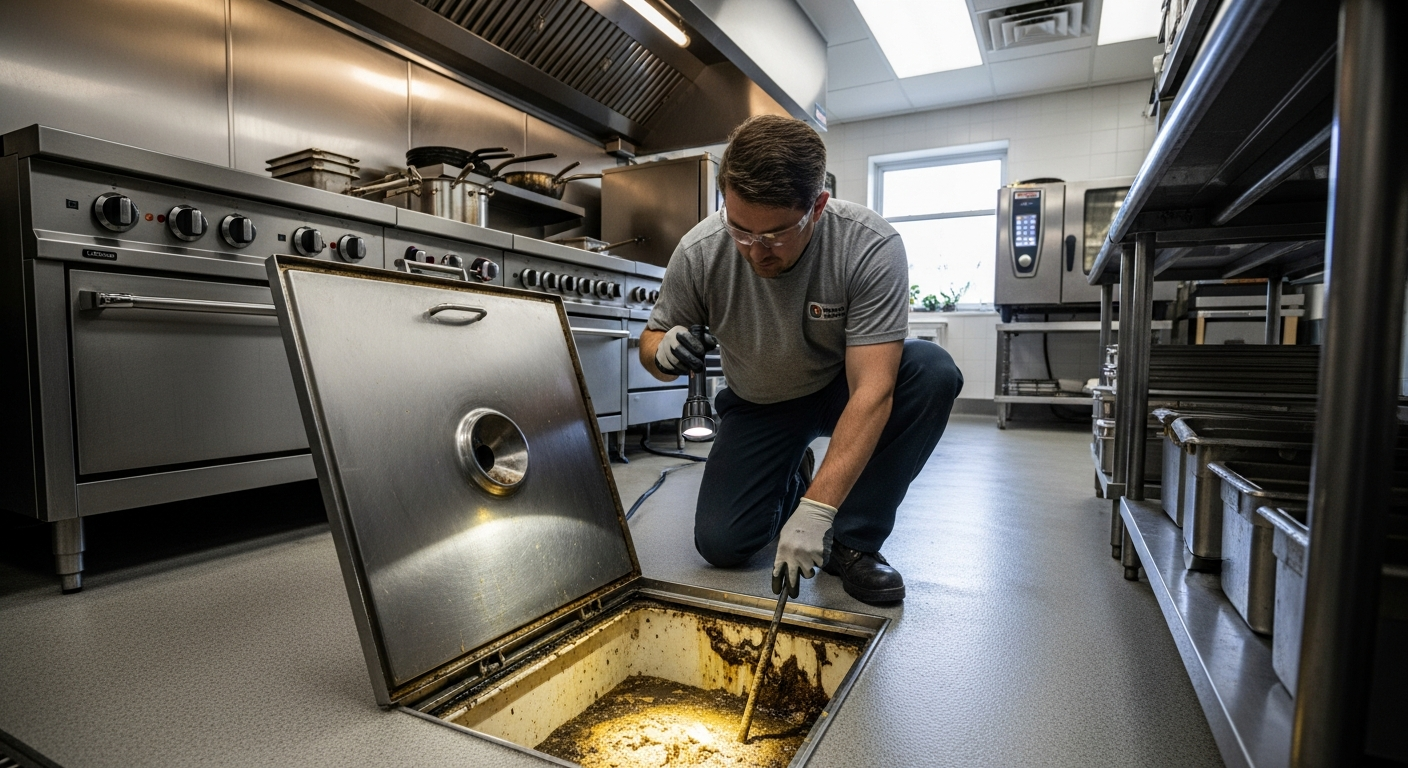
Monthly to Quarterly: Grease Traps for Food Service Tenants
If your property includes any food service tenant, grease trap maintenance deserves its own schedule — see our full grease trap maintenance guide for Houston-specific intervals. A single neglected grease trap can cause a sewage backup that affects multiple units in a shared building, not just the restaurant itself.
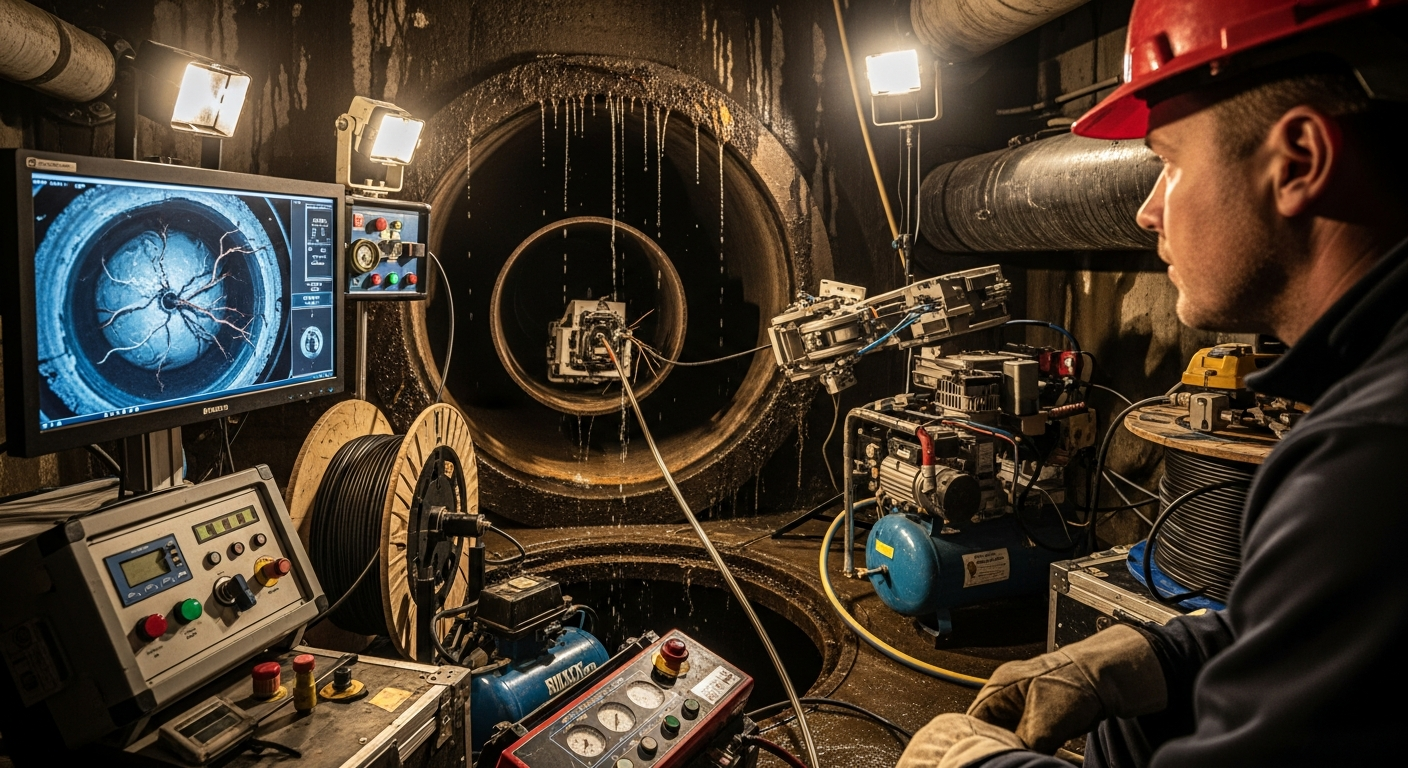
Annually: Sewer Line Camera Inspection
Commercial sewer lines see heavier and more consistent use than residential lines, and older commercial buildings often carry the same aging clay or cast-iron pipe risk discussed in our sewer line repair guide. An annual camera inspection catches root intrusion, cracking, or a developing belly while trenchless repair is still an option, rather than discovering the problem during an active backup.
Ongoing: Fast Response to Slow Leaks and Pressure Changes
In a commercial setting, a slow leak rarely stays small for long given the volume of fixtures and continuous operating hours. Any report of reduced water pressure, an unexplained increase in the water bill, or a damp spot on a ceiling or wall should trigger an inspection within days, not whenever it's convenient — the cost of a quick diagnostic visit is minor compared to water damage that spreads to inventory, equipment, or another tenant's space.
Documentation: A Shutoff-Valve Map for Every Unit
One of the most overlooked pieces of commercial plumbing preparedness is simply knowing where every shutoff valve is — main water, individual unit isolation valves, and gas shutoffs — documented and accessible to whoever is on-site during an emergency. In a multi-tenant building, a mislabeled or unknown shutoff valve can turn a contained leak into water damage across several units while staff scramble to figure out which valve controls what. A one-time investment in a clear, posted valve map pays off the first time it's actually needed.
Building a Relationship With a Commercial Plumbing Provider
Businesses and property managers that use a single trusted commercial plumbing provider for scheduled maintenance get two advantages over calling around for one-off emergency service: a documented maintenance history that speeds up diagnosis when something does go wrong, and priority scheduling from a provider who already knows your property's layout, fixtures, and past issues.
Building a Simple Maintenance Calendar
Most property managers who successfully avoid plumbing emergencies aren't doing anything exotic — they're running a written calendar with recurring reminders instead of relying on memory or waiting for a tenant complaint. A practical version assigns each task from this checklist a specific month or quarter, names who's responsible for scheduling it (in-house facilities staff or an outside plumbing provider), and tracks a simple due/complete status.
Sharing that calendar with every tenant, especially food service tenants responsible for their own grease trap service, closes one of the most common gaps in multi-tenant properties: an owner assuming a tenant is handling maintenance that the tenant assumed was the landlord's responsibility. A shared calendar with clear ownership prevents that assumption gap from turning into a shared emergency.
Budgeting for Preventive Maintenance vs. Emergency Repairs
It's worth putting real numbers next to the case for prevention. A quarterly inspection program for a mid-sized commercial property typically costs a small, predictable amount per visit. Compare that to the cost of a single emergency sewer backup that closes a business for a day, requires after-hours emergency service rates, and potentially triggers cleanup or remediation costs if water reaches inventory, flooring, or another tenant's space — the emergency scenario is almost always many times more expensive than a year of preventive visits would have been.
Framing plumbing maintenance as a budgeted operating expense, rather than a discretionary cost to defer when things are tight, is the mindset shift that separates properties with a track record of avoiding major plumbing failures from those that keep getting surprised by them.
Seasonal Considerations for Houston Commercial Properties
Houston's climate adds a few property-specific items worth folding into the calendar above. Summer's heavy rainfall and high humidity increase the load on backflow preventers and can accelerate corrosion on outdoor-exposed fittings, making the quarterly backflow check especially important heading into and through storm season. Commercial roof drains and area drains also deserve a pre-summer check, since a clogged drain during a heavy Houston downpour can back water up into a building far faster than most property managers expect.
Winter brings the opposite risk: even a short hard freeze can affect exposed commercial plumbing — rooftop units, exterior hose bibs, loading dock areas, and any pipe run through an unconditioned mechanical room. Adding a once-a-year freeze-prep check to the maintenance calendar, mirroring the same precautions homeowners take, is a small addition that prevents a commercial property from being caught off guard the one week a year it actually gets cold in Houston.
Need a licensed Houston plumber for this exact issue?
Frequently Asked Questions
How often should commercial plumbing be inspected?
A general rule is quarterly inspections for water heaters, backflow preventers, and high-traffic fixtures, with annual sewer line camera inspections. Food service tenants need more frequent grease trap service on top of this baseline.
What is a backflow preventer and why does my business need one?
A backflow preventer stops contaminated water from flowing backward into the public water supply, and most commercial properties are required to have one tested and certified regularly as a condition of their water service.
Who is responsible for plumbing maintenance in a multi-tenant commercial building?
This is typically defined in the lease, but property managers commonly handle main lines, backflow preventers, and shared infrastructure, while tenants are responsible for fixtures within their own unit. Clear valve documentation helps regardless of who's responsible for what.
How much does commercial plumbing maintenance cost?
Costs vary significantly by property size and complexity, but a scheduled maintenance program is reliably far less expensive than the cost of an emergency backup, closed business days, or water damage from an undetected leak.
What's the biggest plumbing risk for a commercial property?
For food service properties, grease trap neglect is the most common cause of backups. For general commercial buildings, aging sewer lines and unmonitored slow leaks are the most frequent sources of costly, unplanned downtime.
Can a commercial plumbing issue affect my business's health inspection or compliance status?
Yes, particularly for food service businesses — backups, grease trap violations, and backflow preventer non-compliance can all affect health inspections and, in serious cases, put a wastewater discharge or water service permit at risk.