Why Houston Homes Are Especially Prone to Slab Leaks
Most homes in Greater Houston are built on a concrete slab foundation with copper or PEX water lines running directly underneath it. That works fine — until the soil around and under the slab starts moving. Houston sits on expansive clay soil that swells dramatically when it absorbs rainwater and shrinks just as dramatically during our hot, dry summers.
That constant expansion and contraction flexes the foundation itself, even if you never see a crack in the slab from above. Underneath, that flexing puts repeated stress on rigid copper piping until a joint or a worn section finally gives way. Homes built in the 1970s through the early 2000s, when copper was the standard supply-line material, are the most common candidates — but any home on a slab can develop one.
Add in Houston's clay-heavy neighborhoods (much of the western and southern suburbs sit on some of the most reactive soil in the region) and it's easy to see why slab leaks are one of the most common — and most expensive if ignored — plumbing problems homeowners here deal with.
The age of your home matters too. Copper supply lines installed before modern code updates often lack the protective sleeving now used to reduce direct contact between pipe and concrete, which speeds up corrosion at pressure points. If your home was built between the 1960s and the early 2000s and still has its original copper plumbing under the slab, it's worth knowing the warning signs even if you've never had an issue — statistically, your odds of eventually seeing one are higher than in a newer PEX-plumbed home.
1. An Unexplained Spike in Your Water Bill
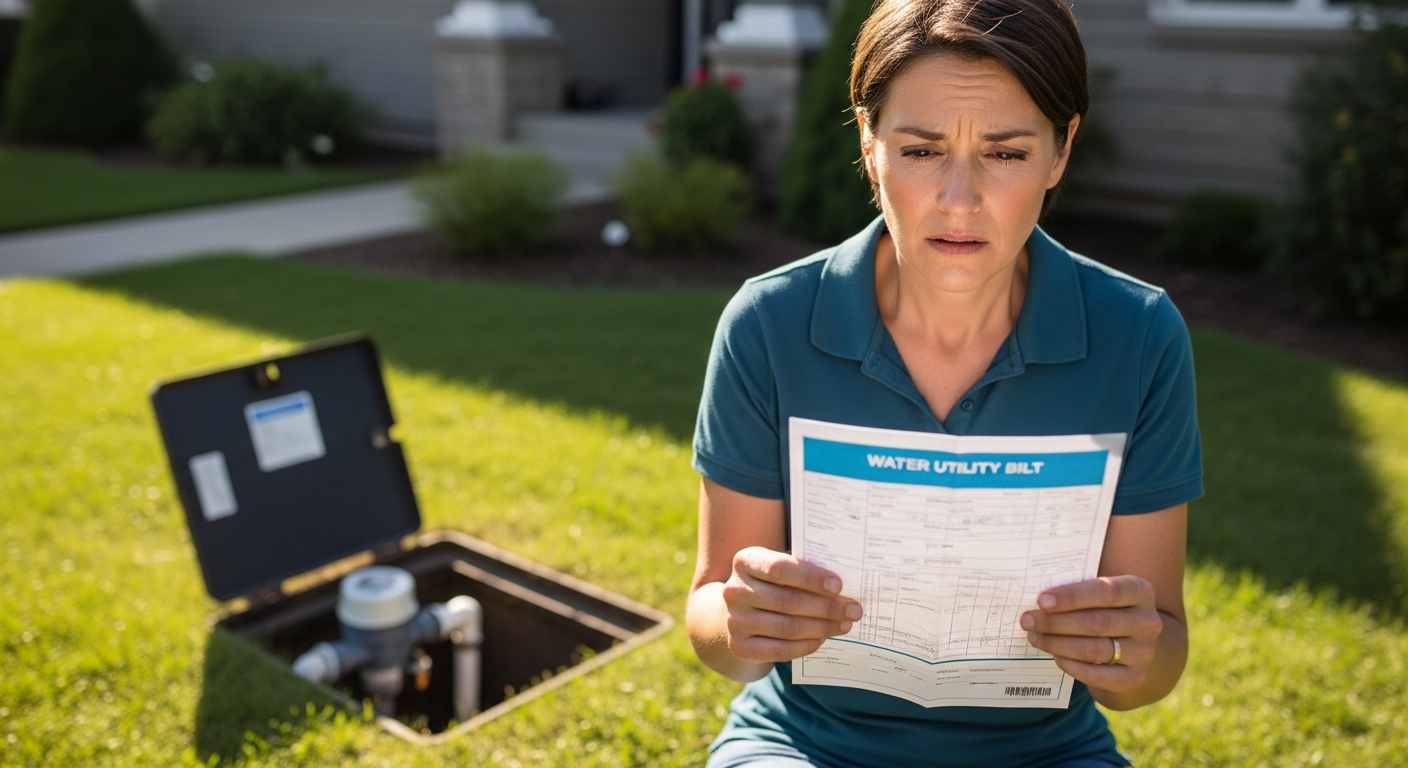
This is usually the first clue. If your water bill jumps 20%, 40%, or more without any change in your household's water use, a hidden leak underneath the slab is one of the most likely explanations. A slow leak can waste hundreds of gallons a week without ever showing up as a puddle.
2. Warm or Damp Spots on Your Flooring
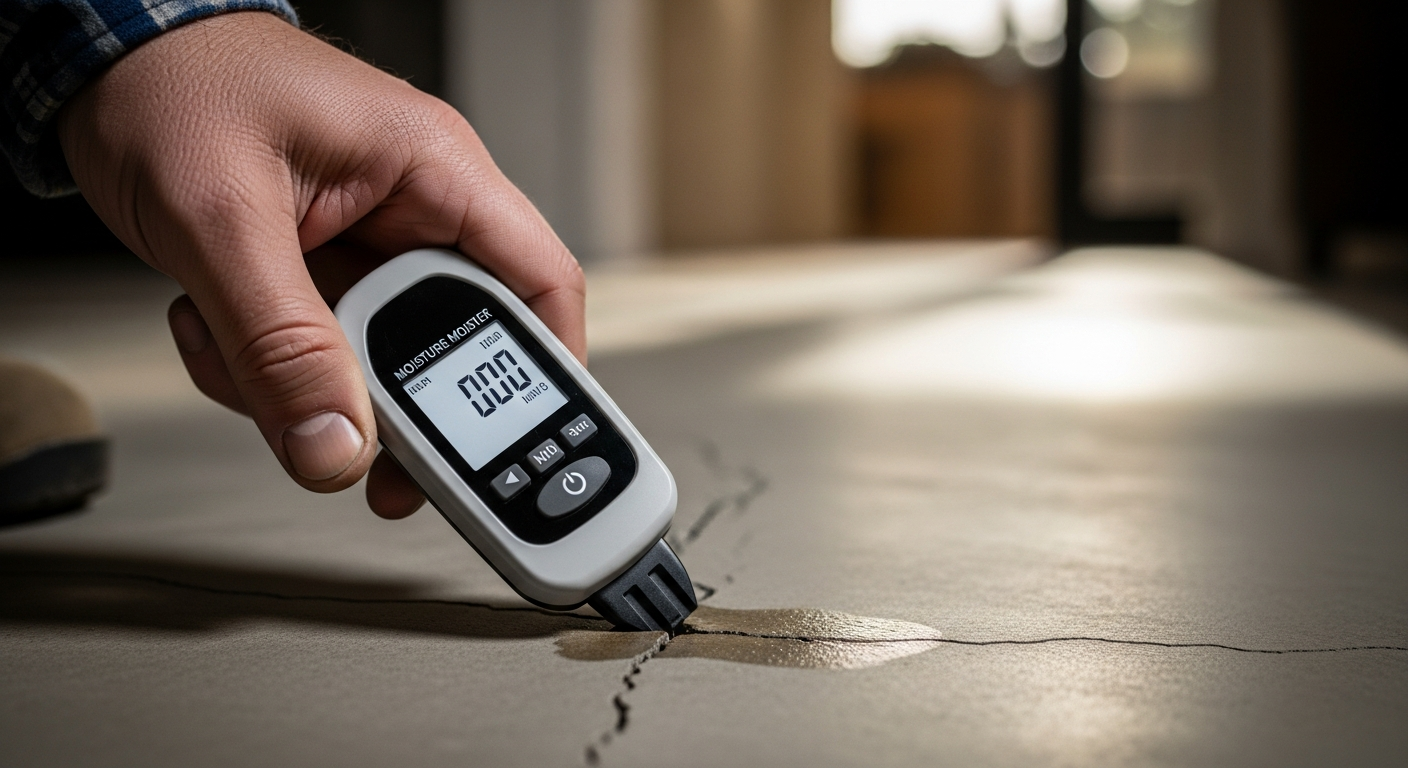
If your water heater is fed by a hot water line under the slab, a leak on that line will heat the concrete above it. You may notice a section of tile, laminate, or even carpet that feels noticeably warm underfoot, especially in the morning. On cold-water leaks, look instead for damp spots, discoloration, or a musty smell in one specific area of the floor.
3. The Sound of Running Water With Everything Off
Turn off every faucet, appliance, and irrigation system in the house, then listen near the floor in different rooms. A faint hissing or trickling sound — especially near a bathroom or utility area — is a strong indicator of a pressurized line leaking underground.
4. Cracks in Walls, Flooring, or the Foundation Itself
Left unaddressed, a slab leak saturates the soil beneath the foundation, which can cause uneven settling. That shows up as new cracks in drywall (especially near doorframes and corners), tile grout lines separating, doors that suddenly stick or won't latch, or visible cracks along the exterior foundation. These are late-stage signs — if you see them, don't wait to get it checked.
5. Mold, Mildew Smell, or Rising Humidity Indoors
Moisture trapped under flooring has nowhere to go, so it works its way up through carpet padding, baseboards, and grout lines. A persistent musty smell in one room, or mold appearing along a baseboard with no obvious water source nearby, is a common secondary symptom of a slab leak that's been running for a while.
6. Your Water Meter Keeps Moving When Nothing Is Running
Most homes have a water meter near the curb or front yard. Turn off every fixture and appliance in the house, then check whether the meter's leak indicator (a small triangle or dial) is still spinning. If it is, water is flowing somewhere on your property — often underground.
7. Reduced Water Pressure in One Fixture or Area
A slab leak diverts water away from your fixtures. If one shower, sink, or hose bib suddenly has noticeably weaker pressure while the rest of the house is normal, a leak between the main line and that fixture is a common cause, particularly in older homes with a single copper trunk line.
What to Do if You Suspect a Slab Leak
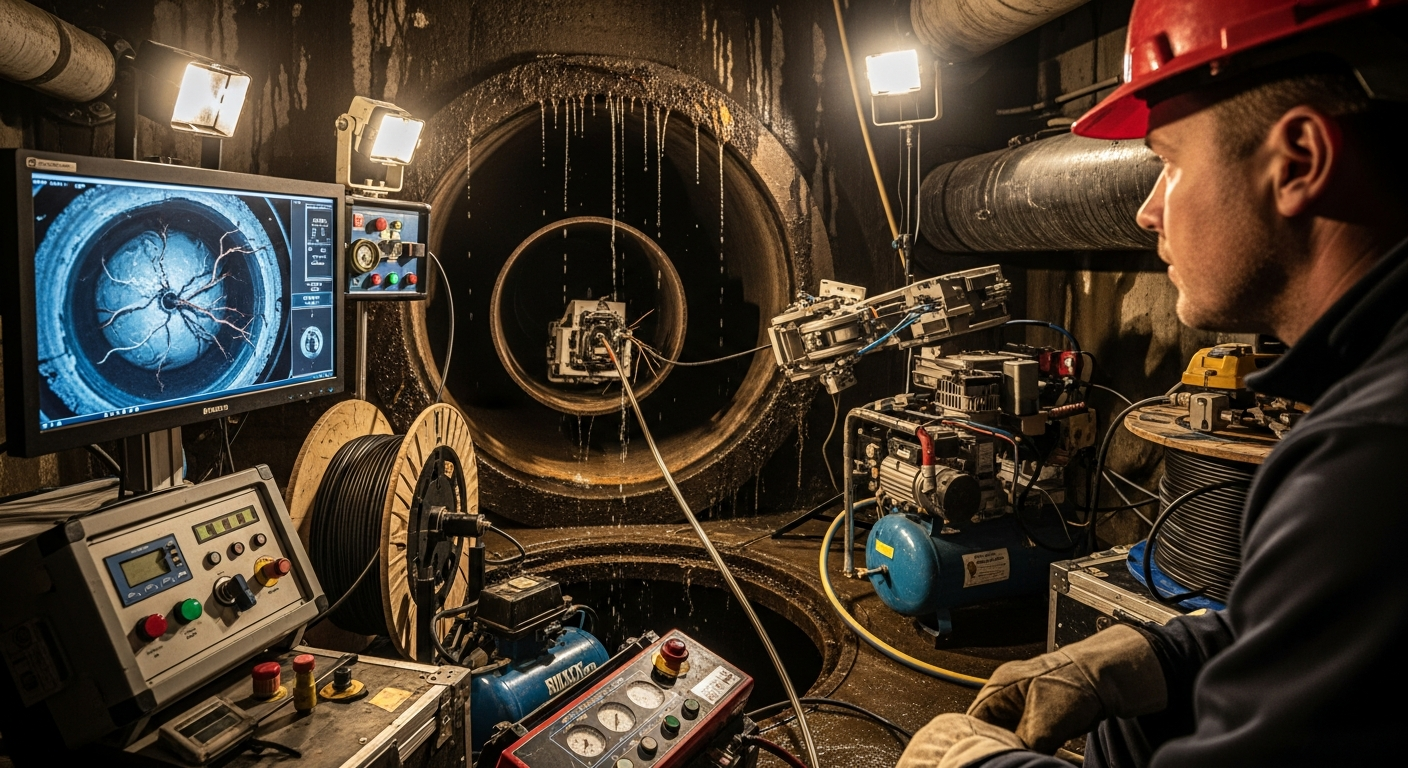
Don't start tearing up flooring on your own. A licensed plumber uses electronic listening equipment and thermal imaging to pinpoint the exact leak location before any concrete is opened, which keeps repair costs and disruption to a minimum. Depending on the location and severity, a plumber may recommend a spot repair, a pipe reroute above the slab, or in some cases a full repipe.
The most important variable is time. A slab leak rarely fixes itself and typically gets more expensive — and more damaging to your foundation — the longer it runs. If you're seeing two or more of the signs above, it's worth getting a licensed local plumber out for an evaluation.
How Much a Slab Leak Can Actually Cost You Over Time
It helps to think of a slab leak in two separate columns: the water that's being wasted, and the damage the leak causes while it runs undetected. On the water side, a moderate slab leak can waste anywhere from a few hundred to several thousand gallons a month, which shows up directly on your water bill long before you notice any physical symptoms in the home.
The damage side is where costs escalate quickly. Early detection often means a repair in the low thousands of dollars. Left to run for months, the same leak can saturate soil under multiple footings, leading to foundation settling that requires structural leveling — a repair category that can run tens of thousands of dollars and is far outside what a plumber alone handles. This is why catching even one or two of the warning signs above and scheduling an inspection is almost always the cheaper path, even if it turns out to be a false alarm.
Repair vs. Reroute: How Plumbers Decide
Once a plumber has located the leak, the next decision is whether to make a direct spot repair in the slab or reroute the line entirely above the foundation, typically through the attic. A single, isolated leak in an easily accessible spot is often a good candidate for a direct repair, which is usually the faster and less expensive option.
If your home's copper plumbing is older and has already had one slab leak, though, many plumbers recommend a full reroute instead. The logic is simple: if one section of aging copper failed under the slab, other sections running through the same soil conditions are working under the same stress, and a second slab leak in a different spot within a few years is common enough that a full reroute can be the more cost-effective decision over the life of the home, even though it costs more upfront.
Need a licensed Houston plumber for this exact issue?
Frequently Asked Questions
How much does slab leak repair cost in Houston?
Leak detection typically starts around $300, with repairs ranging from about $1,000 to $4,000 depending on the leak's location and whether a reroute is needed instead of a direct slab repair. Your plumber will quote the specific job after locating the leak.
Can a slab leak cause foundation damage?
Yes. Prolonged water saturation under a slab can cause uneven settling, which leads to cracked walls, sticking doors, and separated tile or flooring. Addressing a slab leak early is one of the best ways to protect your foundation.
Is a slab leak covered by homeowners insurance?
Many policies cover the cost of accessing and repairing the leak itself but exclude the cost of the water that was lost, and coverage for the pipe and any resulting foundation damage varies by policy. Check your specific policy or ask your insurance agent.
How long can a slab leak go unnoticed?
Depending on its size and location, a slab leak can run for weeks or even months before symptoms are obvious, which is why an unexplained water bill increase is often the earliest and most reliable warning sign.
Do I need to break up my whole floor to fix a slab leak?
Not usually. Modern leak detection lets plumbers pinpoint the exact spot, so most repairs only require opening a small section of slab, or rerouting the line above the floor instead of cutting concrete at all.
Can I test for a slab leak myself?
You can do a basic check by turning off every fixture and watching your water meter for movement, or listening for running water near the floor. For a definitive answer, a licensed plumber's electronic detection equipment is far more accurate.